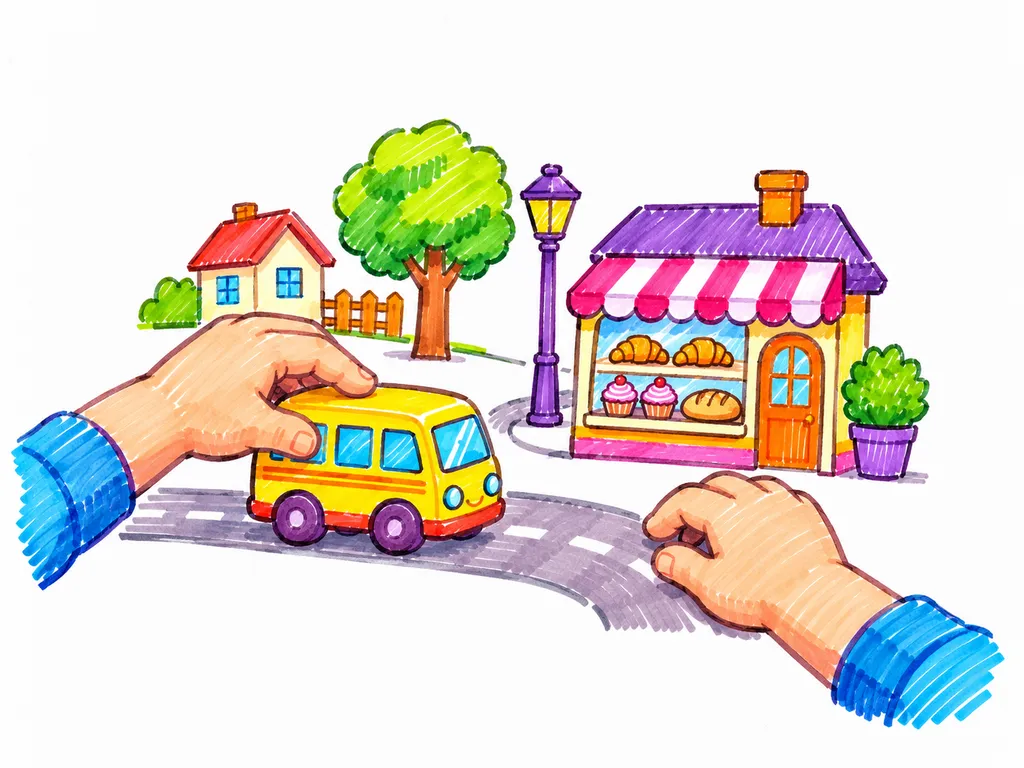
Traffic Sign Vocabulary in English for Kids
Traffic Sign Vocabulary in English for Kids: Words and Activities helps children name road signs, explain their meaning, and follow directions safely. Start with signs near home, school, parks, or public transport. Teach the word, its purpose, and a sentence such as “We must stop here.” Signs differ across countries, so use local examples instead of treating one colour or shape as universal. Short walks, toy roads, drawing, and movement games turn vocabulary into practical language.
Core Words and Phrases
Begin with high-use words: stop, go, slow, turn left, turn right, one way, no entry, speed limit, parking, no parking, exit, and entrance. Add signs for people and places: pedestrian crossing, school zone, bus stop, and bike lane.
More confident learners can add give way or yield, roundabout, roadworks or construction, slippery road, dead end, keep left, and keep right. Teach regional forms that help children understand English from different countries.
Pair each label with an action and reason: “No entry means vehicles must not enter this road.” Traffic Sign Vocabulary in English for Kids: Words and Activities then supports speaking and real-world understanding.
Keep it local. Photograph signs on routes your family uses. Familiar places add meaning and show that English labels may differ from local ones.
Using the Words in Context
Traffic Sign Vocabulary in English for Kids: Words and Activities becomes easier when each item appears in a short exchange. Ask, “What does this sign mean?” Your child might answer, “It means stop,” “Cars must slow down,” or “People can cross here.” Accept a short answer, then model the full sentence.
Move from naming to explaining. A beginner might say, “Bus stop.” A growing speaker can say, “The bus stops here.” An older child can compare signs: “This sign gives information, but that sign warns drivers about roadworks.” The speaking challenge grows while the topic stays familiar.
Guess the Sign
Read one clue at a time: “You must wait,” “Cars cannot enter,” “People cross the road here,” or “Buses pick up passengers here.” Your child names the sign, explains it, and draws it. Then swap roles so your child gives clues.
Practise verbs alongside nouns: stop, wait, cross, turn, enter, park, and follow. Add “on the left,” “on the right,” “at the corner,” and “near the crossing.” These phrases describe a sign’s location as well as its message.
Activities for Different Ages
For school-age kids, choose a small group of signs and add movement. Hold up a stop sign for “freeze,” point left or right for turning, and place a crossing on the floor for careful walking. Keep rounds brief. Repeat the words across several days before adding more.
Prepare a simple sign hunt
- Choose a safe route with an adult.
- Pick five familiar signs to look for.
- Ask your child to name each sign.
- Use one full sentence for every sign.
- Review the words again at home.
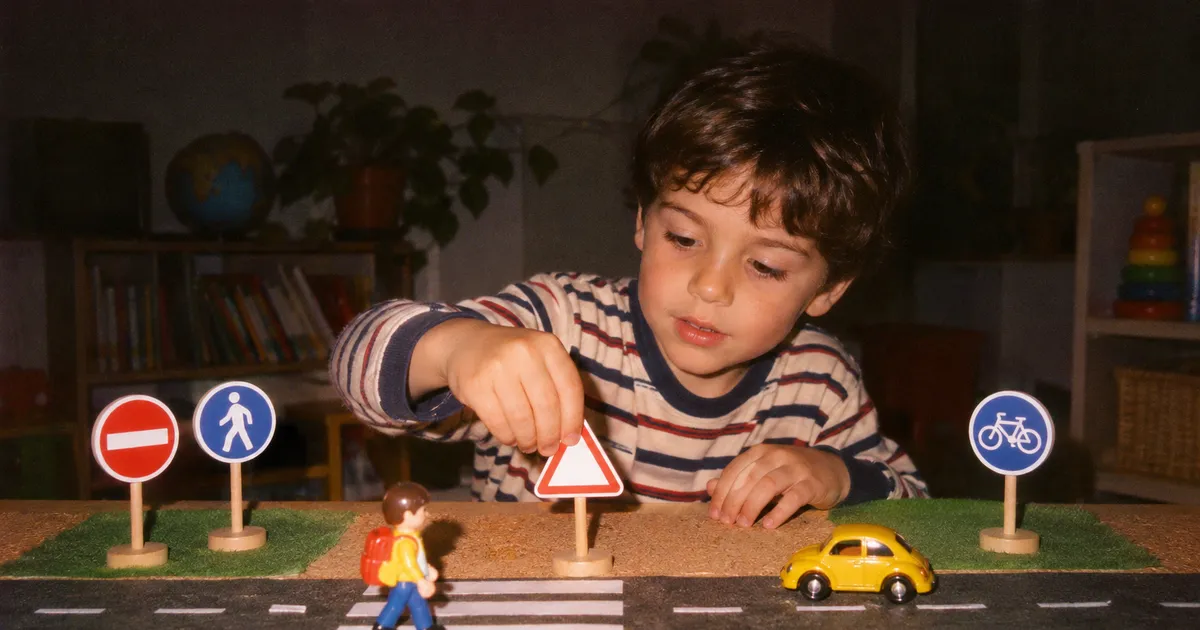
For ages 8–10, build a toy town or draw a street map, then place the signs. Older learners can plan a safe route, compare regional terms, or explain what could happen without a sign. Traffic Sign Vocabulary in English for Kids: Words and Activities should match language ability, not only age.
Practice That Fits Family Routines
Use two-minute practice during a journey, with a map, or while playing with toy vehicles. Ask one question: “Which way can the car go?” or “Why must it slow down?” Stop before attention fades. Frequent, calm review beats one long word test.
Traffic sign learning: myth and fact
Myth: Children must memorise every sign before they can use the vocabulary.
Fact: A small set of familiar signs supports useful sentences from the first lesson.
Myth: A sign’s colour always has the same meaning worldwide.
Fact: Designs and terms can vary, so local examples matter.
Across LearnLink lessons, our tutors can model a word, use it in a sentence, and prompt a response. Parents can follow the same sequence at home: point, name, explain, and ask. This creates a consistent speaking pattern.
Correcting Common Mistakes
Children may confuse left and right, use go for every movement, or say “no enter” instead of “no entry.” Correct the phrase gently: “Yes, cars cannot enter. The sign says ‘no entry.’” Keep the meaning, then supply the natural English form.
Children may also treat every sign as an order. Some signs warn; others provide information. Ask, “Does it tell us what to do, warn us, or show us a place?” The question develops meaning and vocabulary.
Real-road practice must remain observational. Watch from a safe pavement or protected place, with an adult making every road decision. Never ask a child to approach traffic, read signs while cycling, or test a rule without close adult guidance.
- Choose five traffic sign cards and ask your child to name each one.
- Compare stop, yield, and speed limit signs, correcting colors and shapes together.
- Point to one sign in a picture book and model its pronunciation.
- Sort six sign pictures into warning, instruction, and information groups.
- Role-play a street crossing and prompt complete sentences about each sign.
When a word has several meanings or pronunciations, Cambridge Dictionary is a useful check before turning it into child-friendly examples.
Frequently Asked Questions
How Many Traffic Signs Should My Child Learn at Once?
Start with three to five signs your child sees regularly. Practise naming them and saying one sentence about each. Add signs when the first group feels familiar. Traffic Sign Vocabulary in English for Kids: Words and Activities works best when children explain a few signs, not recognise a long list without speaking.
Should My Child Learn British or American Traffic Sign Terms?
Teach the local term, then add a regional alternative found in books, videos, or travel. Children may meet both “give way” and “yield,” or “pedestrian crossing” and “crosswalk.” Present them as regional choices with similar meanings, not right and wrong forms.
Can We Practise Traffic Sign Vocabulary Without Going Outside?
Yes. Draw a street, arrange toy vehicles, or make cards with symbols and words. Your child can place signs on the map, give directions, and explain each choice. Photos from familiar routes also work. Indoor practice before a sign hunt introduces the words children should notice.
What Should I Do If Traffic Signs Differ in Our Country?
Use local signs as the main examples and explain that designs vary. Focus on each sign’s purpose and its English phrase. Your child can compare two versions and identify what remains the same. This respects local road rules while building internationally understood English.
Try this next: Choose five local signs, practise one sentence for each, and review them for two minutes a day over the next three days.
If your child needs steady speaking practice, start small — choose a trial lesson.
Stay updated on our latest tips and resources by following us on Instagram LearnLink.